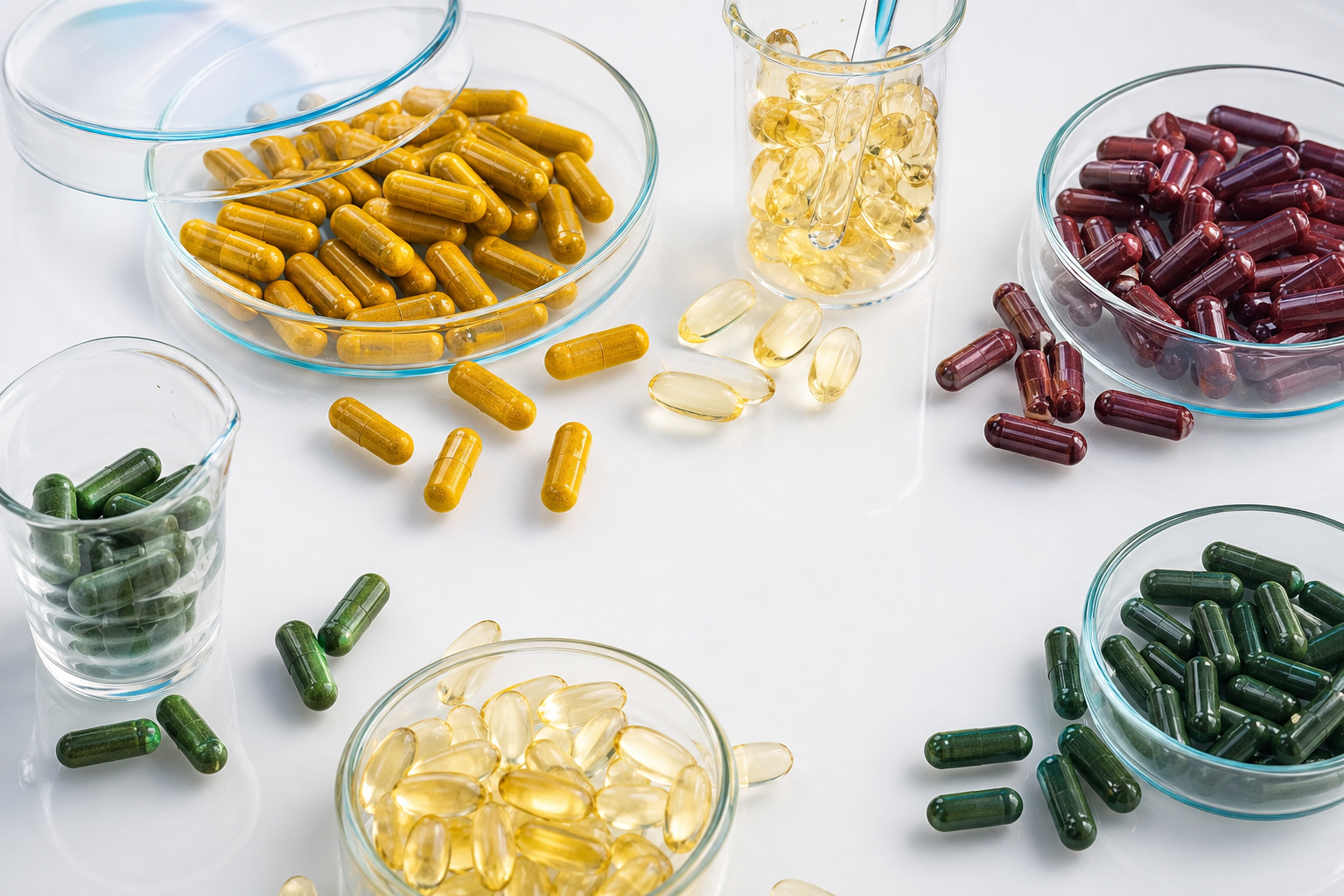
If you are a CPG brand manager or quality assurance director today, you already know the regulatory environment is getting more complex by the day. Consumer demand for botanical and plant-based wellness products has skyrocketed, placing unprecedented stress on global agricultural supply chains. But this surge in demand brings a dark side: a drastically increased risk of economic adulteration and heavy metal contamination.
For brands selling into California, these risks carry severe legal and financial penalties. Navigating the regulatory threshold of Prop 65 heavy metal testing for dietary supplements is no longer just about checking a box on a final product certificate of analysis (COA). It requires building a comprehensive, auditable, end-to-end quality framework. This blog breaks down the dual threat of supply chain adulteration and Proposition 65 limits, and shares actionable steps to protect your brand equity and consumers.
The Dual Threat: Economic Adulteration and Heavy Metal Contamination
Supply chain pressure creates a breeding ground for cutting corners. When a specific botanical—say, ashwagandha, turmeric, or elderberry—experiences a spike in consumer popularity coupled with a poor harvest year, raw material shortages are inevitable. This environment directly incentivizes economically motivated adulteration.
Unscrupulous suppliers might substitute cheaper, visually similar plant species, dilute potent extracts with unlisted fillers like maltodextrin, or utilize exhausted biomass that has already been stripped of its active phytochemicals. Unfortunately, the pervasive risks of product adulteration within the botanical supply chain continue to be a primary challenge for regulatory authorities and quality control teams worldwide (Gurley et al., 2024).
However, adulteration is not just an issue of efficacy or consumer fraud; it is fundamentally a safety and compliance crisis. When a brand loses control of a botanical's true identity, it inherently loses control of that ingredient's heavy metal profile. If a supplier stretches a batch of botanical extract by adding low-grade excipients or sourcing plants grown in heavily industrialized regions, they are actively introducing new vectors for lead, cadmium, arsenic, and mercury contamination. By the time that raw material reaches your manufacturing facility, the damage is already embedded in the powder.
Why Botanicals Are Exceptionally High-Risk for Prop 65 Triggers
To understand why botanicals trigger warning labels so frequently, we have to look at the intersection of plant biology and modern extraction techniques. Plants act as natural bioaccumulators. Depending on the pH of the soil, the quality of agricultural water, and the proximity to industrial manufacturing, plants will naturally pull trace elements from their environment into their roots, leaves, and stems.
In standard food products, these trace metals might exist in nominal, safe amounts. But dietary supplements rely on concentrated extracts to deliver therapeutic doses of active compounds. If you process an herb at a 10:1 ratio, you are not just concentrating the beneficial alkaloids or flavonoids; you are concurrently concentrating the heavy metals.
This biochemical reality crashes directly into the highly conservative nature of California’s Safe Drinking Water and Toxic Enforcement Act of 1986, widely known as Proposition 65. The safe harbor limits established under this regulation are notoriously strict. For example, the Maximum Allowable Dose Level (MADL) for lead is set at a mere 0.5 micrograms per day (µg/day) (U.S. Food and Drug Administration, 2026). Because this threshold is absolute and based on daily exposure rather than a simple parts-per-million concentration, a highly concentrated botanical extract can easily exceed the 0.5 µg/day limit if the daily dosage is large enough, forcing brand managers into costly reformulation or mandatory warning label scenarios.
Strategic Prop 65 Heavy Metal Testing Dietary Supplements
Historically, many supplement brands approached heavy metals reactively: blending a batch, sending it to a third-party lab, and hoping the results came in under the legal limit. In today’s litigious environment, hope is not a viable quality control strategy. Our team advocates for proactive risk management, which means integrating highly sensitive testing protocols at the raw material stage, long before compounding begins.
Because the regulatory limits are incredibly low, the analytical methods you choose matter immensely. Standard testing methodologies that work perfectly well for general food safety often lack the sensitivity required for Prop 65 compliance. This is why our laboratories rely heavily on Inductively Coupled Plasma Mass Spectrometry (ICP-MS) for advanced heavy metal analysis. ICP-MS provides the ultra-low detection limits—often down to parts-per-billion (ppb) or parts-per-trillion (ppt)—necessary to accurately quantify trace metals in complex botanical matrices.
Furthermore, compliance is a moving mathematical target. You cannot simply look at a raw material specification sheet and determine Prop 65 compliance based on the ppm value alone. Brand managers must calculate the heavy metal exposure based on the maximum daily recommended dosage on the product label. If your product directions suggest taking three capsules a day instead of one, you have effectively tripled the consumer's daily heavy metal exposure. A proactive testing strategy accounts for this dosing multiplication early in the formulation phase, ensuring that the finished product remains comfortably below the MADL safe harbor limits.
Establishing an Auditable Supply Chain Quality Framework
You cannot test quality into a poorly sourced product. A passing lab result on a finished good is meaningless if the foundational supply chain is fundamentally flawed. Protecting your brand requires an auditable supply chain framework that traces raw materials back to their geographical origin.
Modern Current Good Manufacturing Practices (cGMPs), particularly 21 CFR Part 111, mandate strict genealogy of materials, comprehensive incoming raw material inspections, and absolute data integrity from the moment a supplier is approved to the final release of the product (Singla, 2025). Building robust dietary supplement quality assurance frameworks means transitioning away from relying solely on supplier-provided COAs—which are easily forged or manipulated—and moving toward a verified, independent qualification process.
When we consult with CPG brands, we emphasize that supplier qualification is an ongoing, dynamic process. It involves rigorous desk audits, historical performance tracking, and continuous verification testing. If a supplier suddenly changes their geographical sourcing region due to a crop failure, your quality team must automatically trigger a re-qualification protocol, as the soil chemistry—and therefore the heavy metal profile—will have entirely changed.
Key Steps for CPG Brand Managers
To operationalize these concepts, our team recommends implementing the following critical steps into your quality management systems:
- Implement Rigorous Identity Testing: Before testing for heavy metals, you must definitively prove you have the correct plant. Utilize orthogonal testing methods such as Fourier-Transform Infrared Spectroscopy (FTIR), High-Performance Thin-Layer Chromatography (HPTLC), or DNA barcoding to confirm botanical identity and detect economically motivated adulteration early.
- Conduct Risk-Based Supplier Audits: Not all ingredients pose the same risk. Categorize your suppliers based on historical data, ingredient vulnerability, and geographical origin. High-risk botanicals sourced from heavily industrialized regions should trigger more frequent, in-depth on-site audits and tighter raw material testing frequencies.
- Design Dynamic Sampling Plans: Static testing plans are vulnerable to supply chain volatility. Your sampling plan should be statistically sound and capable of adapting. If a supplier fails an identity or heavy metal screen, your system should automatically tighten the sampling frequency for subsequent batches until statistical confidence is restored.
Conclusion: Moving Forward with Confidence
The collision of skyrocketing botanical demand, economically motivated supply chain adulteration, and strict California regulations has created a high-stakes environment for the wellness industry. While managing Prop 65 heavy metal testing dietary supplements poses significant operational and financial challenges, it is also a distinct opportunity. Brands that prioritize supply chain transparency and rigorous analytical science naturally separate themselves from lower-tier competitors in the eyes of consumers and regulators alike.
By adopting proactive ICP-MS testing, enforcing strict botanical identity protocols, and auditing your supply chain with unyielding precision, you protect both the safety of your consumers and the long-term equity of your brand. You do not have to navigate these complex regulatory waters alone. See how Mérieux NutriSciences can help you along every step of the reformulation process, from initial raw material qualification to finished product compliance testing.
References
Gurley, B. J., Chittiboyina, A. G., ElSohly, M. A., Yates, C. R., Avula, B., Walker, L. A., Khan, S. I., & Khan, I. A. (2024). The National Center for Natural Products Research (NCNPR) at 30: A Legacy of Pioneering Research in Natural Products and Dietary Supplements. Journal of Dietary Supplements, 22(1), 193–218. https://doi.org/10.1080/19390211.2024.2410758
Singla, M. (2025). Navigating the United States, Japan, Canada, European Union, South Korea, Australia, and India Landscape of Dietary Supplement Regulation and Quality Assurance. International Journal of Pharmaceutical Sciences, 3(12), 2216–2234. https://www.ijpsjournal.com/article/Navigating+the+United+States+Japan+Canada+European+Union+South+Korea+Australia+and+India+Landscape+of+Dietary+Supplement+Regulation+and+Quality+Assurance
U.S. Food and Drug Administration. (2026, March 10). GRAS Notice (GRN) 1292. Regulations.gov. https://downloads.regulations.gov/FDA-2025-N-1928-0078/attachment_1.pdf